This exhibition table shows a carpet by the artist Andrea Zittel on which you can have dinner. It consists of moss-green, blue and black rectangular forms, in which two plates, cutlery and glasses are placed opposite each other.
Sammlung Goetz

Andrea Zittel

"I think that the 'desert island' represents our greatest fear and our greatest fantasy. Due to the complexity and contradictions of our needs, I feel compelled to create a complex of works that explores and appeals to these needs." (Andrea Zittel)

Andrea Zittel's artistic career began with the design of space-saving furniture for the cramped quarters in New York apartments, which thus fulfills their needs. While searching for organization systems for all areas of life, she sees herself as both a researcher and a test person. The American artist thus observes herself and her daily routines and subjects herself to experiments in order to find out how a living environment and property can change a person's views and behavior.
With living units, from the beginning of the 1990s, she began designing small, compact units for rationalizing and structuring daily activities. These included areas for eating, sleeping, washing, storage and social activities.
As demand developed for her life management models, Zittel founded A–Z Administrative Services, which united conceptual organization, office, store, lab and housing. In addition to her stationary living structures, which include pieces of clothing and carpets, she also designs mobile living arrangements that focus on the dream of freedom.

The works shown in the Sammlung Goetz exhibit give viewers a comprehensive look at the production of A–Z Administrative Services. Zittel developed her own color scheme for the gallery rooms. Especially for this exhibition, the artist created the work A-Z Cellular Compartment Units Customized By Sammlung Goetz (2002). During the design of this living unit with six compartments, the artist derived inspiration from the architecture of the building designed by Herzog & de Meuron. The interior design and thus the function of the unit were created in close collaboration with the collector. In accordance with the latter's wishes and her provision of certain furnishings, the Cellular Compartment Units are infused by an atmosphere of Zen Buddhism.

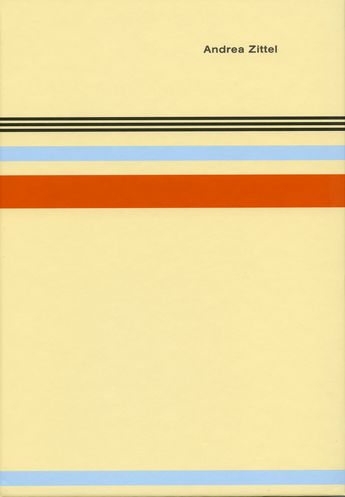
Andrea Zittel

151 pages, 86 ill., hardcover
German/English
2003, Kunstverlag Ingvild Goetz GmbH, Hamburg
ISBN 3-9808063-2-4
€ 10,00

learn more

Upcoming

Cyrill Lachauer. The Sunset Route

| Kunstpalais Erlangen

feat. Mike Brodie, Mouse Green, Rhyw, Mia Justice Smith, Moritz Stumm

In the exhibition The Sunset Route, on view at the Kunstpalais Erlangen and created in collaboration with the Sammlung Goetz, Cyrill Lachauer presents works from 2020 to 2025, a period during which he traveled on freight trains through the USA, Mexico, and Bosnia. In the spirit of poetic ethnography, he created photographs and films that are now being shown together for the first time. They all explore questions of freedom, self-determination, and resistance, as well as colonization, exclusion, and exploitation.


Laurie Simmons. Dollhouse Photographs

| Deutsches Theatermuseum

The American artist Laurie Simmons is known for her photographs featuring tiny dolls representing stereotypical female roles in domestic interiors. The exhibition, a collaboration between Sammlung Goetz, Deutsches Theatermuseum and Filmfest Munich, presents a selection of works by Simmons that cast a critical gaze at gender stereotypes in the American middle class.

Sterling Ruby

| Sammlung Goetz /Schaufenster

The American artist Sterling Ruby, who lives and works in Los Angeles, is known for his multi-disciplinary body of work, which includes sculptures, ceramics, bronzes, collages, textiles, and expansive spray-painted canvases in which he intertwines a wide variety of autobiographical, art historical, and sociological sources. Through deconstruction and reconstruction, Ruby explores the idea of a non-hierarchical and borderless universe. The exhibition at the Sammlung Goetz /Schaufenster lends insight into his multifaceted artistic practice through a selection of works created between 2008 and 2016.


Jeff Wall

| Sammlung Goetz /Schaufenster

Canadian artist Jeff Wall is one of the most influential photographers of our time. In his elaborately staged pictorial compositions, he combines the narrative of cinema with painting. Wall became known for his large-format lightbox images, which are formally more reminiscent of the world of advertising than that of fine art. With this technique, he revolutionized the medium of photography, elevating it to the height of painting and sculpture. The exhibition at the Sammlung Goetz /Schaufenster presents a selection of his iconic lightbox images from the 1990s.

further exhibitions

view archive