Home is an ambivalent place: on the one hand, it provides protection and retreat; on the other hand, family expectations can make it overwhelming and oppressive. In its exhibition No Place like Home the Sammlung Goetz explores this wide range of intra-family relationships.
The term "home" is associated with the idea of a place where one feels protected and accepted, and where traditions are lived and identity can unfold. Yet home is often also the place where power struggles are played out and where unspoken hostilities make life difficult. The ninth media art exhibition in the former air-raid shelter of Haus der Kunst presents 14 works from the Sammlung Goetz that explore the home environment and the emotions associated with it. The works focus on a variety of intra-family conflicts, thereby revealing social conventions and enabling us to look into the depths of human relationships.
Disappointment over unredeemed expectations is negotiated in the film Eight by Hubbard/Birchler. In it, a little girl experiences how her carefully planned eighth birthday party literally falls to pieces. Ten years later, the two artists made a new film with the same protagonist, who now stands at the threshold of adulthood. In Eighteen they illustrate the challenges the girl faces after leaving the sheltered parental home as she strives to find a new role for herself. Established structures, however, can also be perceived as rigid, cold and emotionless. With its emblematic images, in his film Alpsee, Matthias Müller provides a disturbing view into a 1960s childhood. The topic of destructive parent-child relationships is broached by Patricia Pearson and Veronika Veit in their films. A slide projection by Lorenz Straßl shows unpopulated areas where inhabitants seem to have left perplexing traces. Here the home is no longer a place to live, but a reflection of personal feelings.
feat. Mike Brodie, Mouse Green, Rhyw, Mia Justice Smith, Moritz Stumm
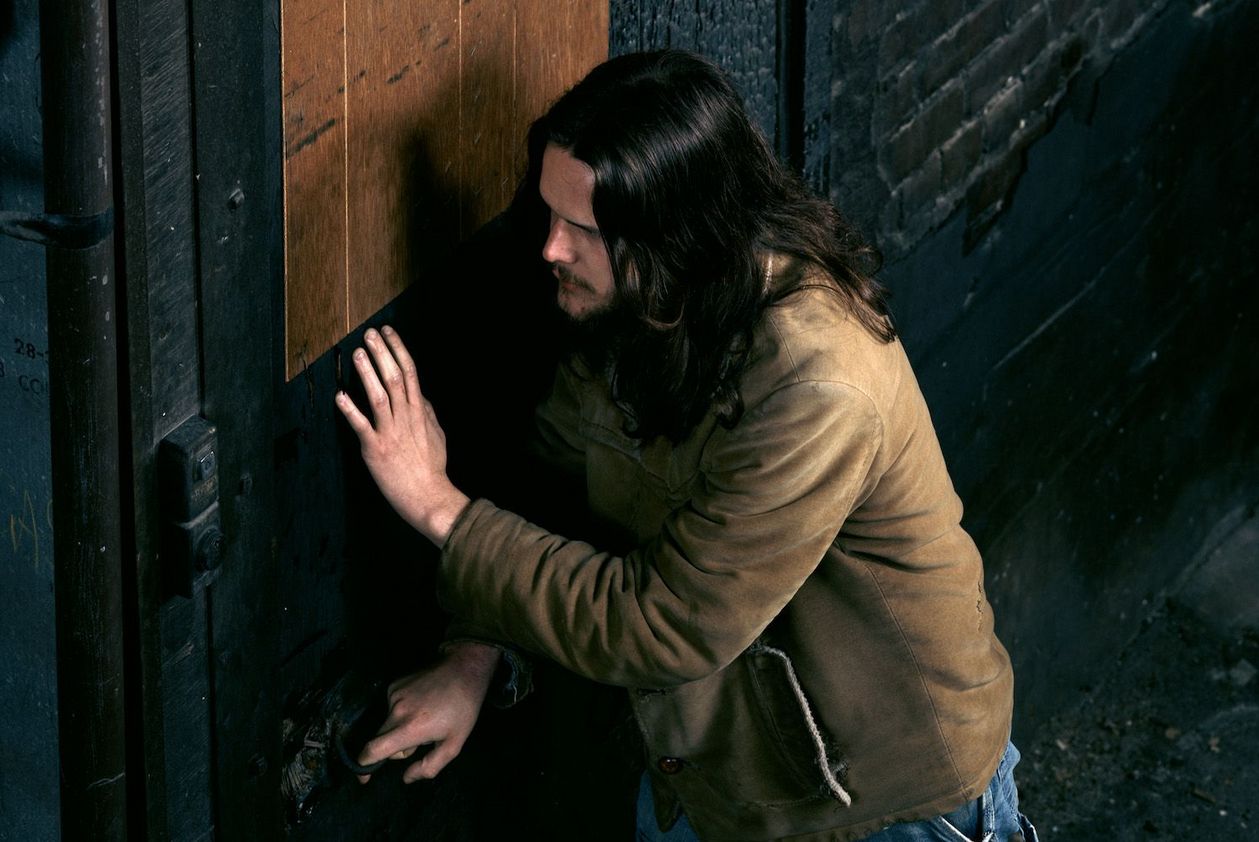
In the exhibition The Sunset Route, on view at the Kunstpalais Erlangen and created in collaboration with the Sammlung Goetz, Cyrill Lachauer presents works from 2020 to 2025, a period during which he traveled on freight trains through the USA, Mexico, and Bosnia. In the spirit of poetic ethnography, he created photographs and films that are now being shown together for the first time. They all explore questions of freedom, self-determination, and resistance, as well as colonization, exclusion, and exploitation.
The American artist Laurie Simmons is known for her photographs featuring tiny dolls representing stereotypical female roles in domestic interiors. The exhibition, a collaboration between Sammlung Goetz, Deutsches Theatermuseum and Filmfest Munich, presents a selection of works by Simmons that cast a critical gaze at gender stereotypes in the American middle class.
Los Angeles-based American artist Sterling Ruby is known for his cross-genre work, which ranges from ceramics and bronzes, collages and textiles, to enormous, spray-painted paintings. In his works, Ruby weaves together a variety of different autobiographical, art-historical, and sociological sources. Through deconstruction and reconstruction, he probes the idea of a non-hierarchical and borderless universe. The exhibition at the Sammlung Goetz /Schaufenster provides insight into his multi-layered artistic practice.
Canadian artist Jeff Wall is one of the most influential photographers of our time. In his elaborately staged pictorial compositions, he combines the narrative of cinema with painting. Wall became known for his large-format lightbox images, which are formally more reminiscent of the world of advertising than that of fine art. With this technique, he revolutionized the medium of photography, elevating it to the height of painting and sculpture. The exhibition at the Sammlung Goetz /Schaufenster presents a selection of his iconic lightbox images from the 1990s.