The face of a young Asian woman shrouded in cigarette smoke
Sammlung Goetz| Projection on the outer wall

Yang Fudong: Honey (mi), 2003 & Lock Again, 2004

The video works Honey (mi) and Lock Again by the Chinese artist Yang Fudong display a new cinematic aesthetic, which on the one hand reflect the tradition of progressive Shanghai film production from the 1930s and on the other also highlight matters concerning society in China today, which is in a transition between old and new gender images, consumerism and communism, city and countryside, as well as censorship and dreams of freedom.


In the opening shot of Honey (mi), the viewer is confronted with a view of a woman’s legs in fishnet stockings, which immediately generates an erotically charged atmosphere. A well-groomed woman sits smoking, firmly enthroned on a red sofa. She is reminiscent of the nameless prostitute in the Chinese film The Goddes (1934) who stands in her long dress on a pavement at night in Shanghai waiting for clients. The woman in Honey (mi) seems to be subject to the conventional image of the traditional gender role, which contrasts with the men in her room who are all wearing the standard Maoist uniform. She is also wearing the jacket and cap of a uniform, but combined however with a western oriented clothing style. Fudong transforms the aesthetics of silent films from the early days of Chinese cinema into a world of colorful images. Just as in the silent films, there is no spoken communication between the characters, yet they seem to be connected in the narrative. Subsequent gaps in the plot leave room for presumptions and associations. The bird’s eye perspective of the camera and the suspenseful music conjures up pictures of a spy thriller. Together with the lighting of the individual scenes and the images, which are obviously taken from the classic subject of film history (such as car chases or gambling behind closed doors), the film industry’s construed structures are exposed.
In Lock Again, the viewer encounters two men in white police uniform who are handcuffed to one another in some scenes. Wearily catching their breath, they sit on the floor and are covered in blood. They look as if they are on the run; in the end they appear to get away: together with a woman in a pink dress, they row a boat toward freedom. However, in the last scene of the film the boat is back, floating on the water of an indoor swimming pool. The boat is empty, the woman has disappeared, the men are standing up to their chests in water, the dream has come to an end, the blood is fake.

Honey (mi), 2003
Single-channel video installation (color, sound)
Duration: 9’ 29’’

Lock Again, 2004
Single-channel video installation (color, sound)
Duration: 3’


Upcoming

Cyrill Lachauer. The Sunset Route

| Kunstpalais Erlangen

feat. Mike Brodie, Mouse Green, Rhyw, Mia Justice Smith, Moritz Stumm

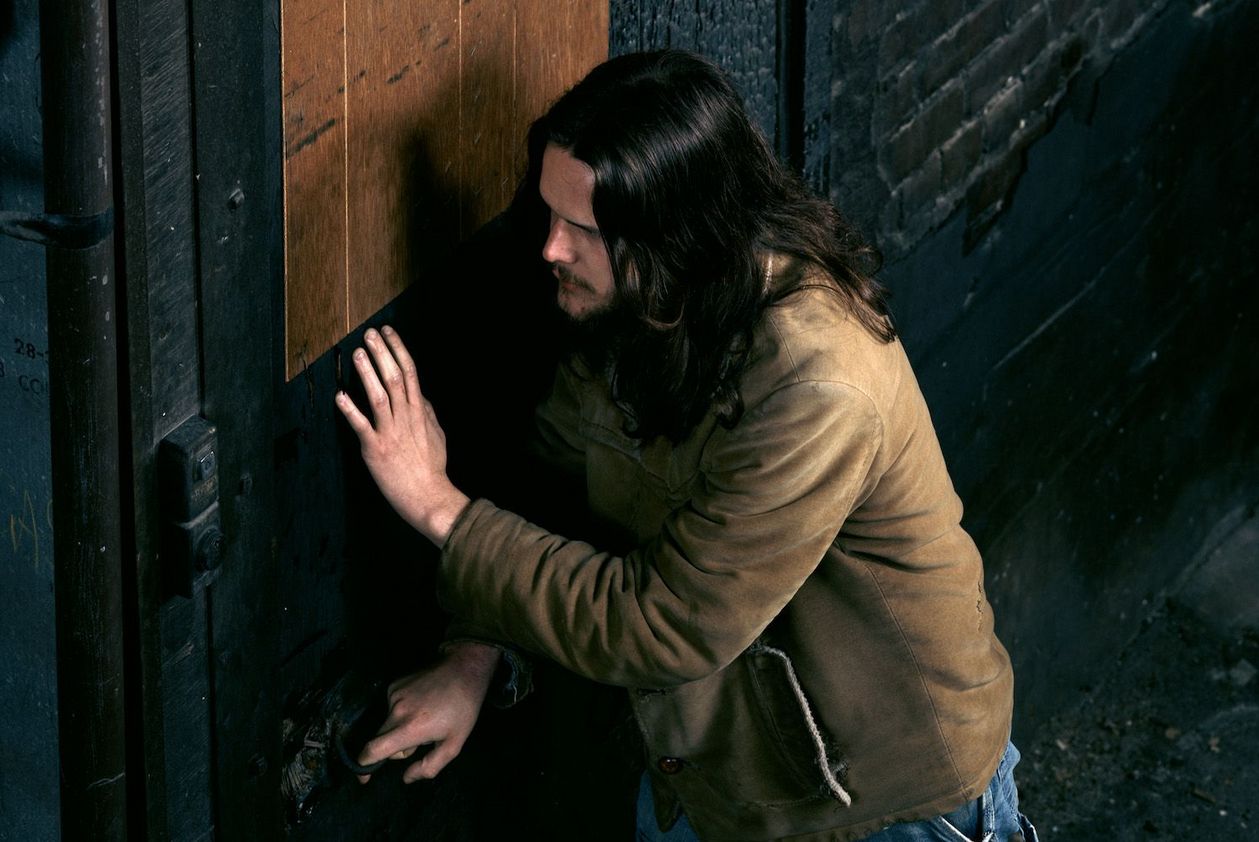
In the exhibition The Sunset Route, on view at the Kunstpalais Erlangen and created in collaboration with the Sammlung Goetz, Cyrill Lachauer presents works from 2020 to 2025, a period during which he traveled on freight trains through the USA, Mexico, and Bosnia. In the spirit of poetic ethnography, he created photographs and films that are now being shown together for the first time. They all explore questions of freedom, self-determination, and resistance, as well as colonization, exclusion, and exploitation.


Laurie Simmons. Dollhouse Photographs

| Deutsches Theatermuseum

The American artist Laurie Simmons is known for her photographs featuring tiny dolls representing stereotypical female roles in domestic interiors. The exhibition, a collaboration between Sammlung Goetz, Deutsches Theatermuseum and Filmfest Munich, presents a selection of works by Simmons that cast a critical gaze at gender stereotypes in the American middle class.

Sterling Ruby

| Sammlung Goetz /Schaufenster

Los Angeles-based American artist Sterling Ruby is known for his cross-genre work, which ranges from ceramics and bronzes, collages and textiles, to enormous, spray-painted paintings. In his works, Ruby weaves together a variety of different autobiographical, art-historical, and sociological sources. Through deconstruction and reconstruction, he probes the idea of a non-hierarchical and borderless universe. The exhibition at the Sammlung Goetz /Schaufenster provides insight into his multi-layered artistic practice.


Jeff Wall

| Sammlung Goetz /Schaufenster

Canadian artist Jeff Wall is one of the most influential photographers of our time. In his elaborately staged pictorial compositions, he combines the narrative of cinema with painting. Wall became known for his large-format lightbox images, which are formally more reminiscent of the world of advertising than that of fine art. With this technique, he revolutionized the medium of photography, elevating it to the height of painting and sculpture. The exhibition at the Sammlung Goetz /Schaufenster presents a selection of his iconic lightbox images from the 1990s.

further exhibitions

view archive